
Vibe coding: what about it?
As AI changes the way software gets built, new paradigms are starting to appear alongside it, and one of them is vibe coding. Vibe coding is a way of building software with AI where developers describe what they want in plain language, and large language models (LLMs) handle most of the implementation.
A vibe coding cleanup specialist is a developer who takes AI-generated prototype code and turns it into production-ready software by fixing structural issues, improving maintainability, closing security gaps, and ensuring the system can scale and survive real-world use.
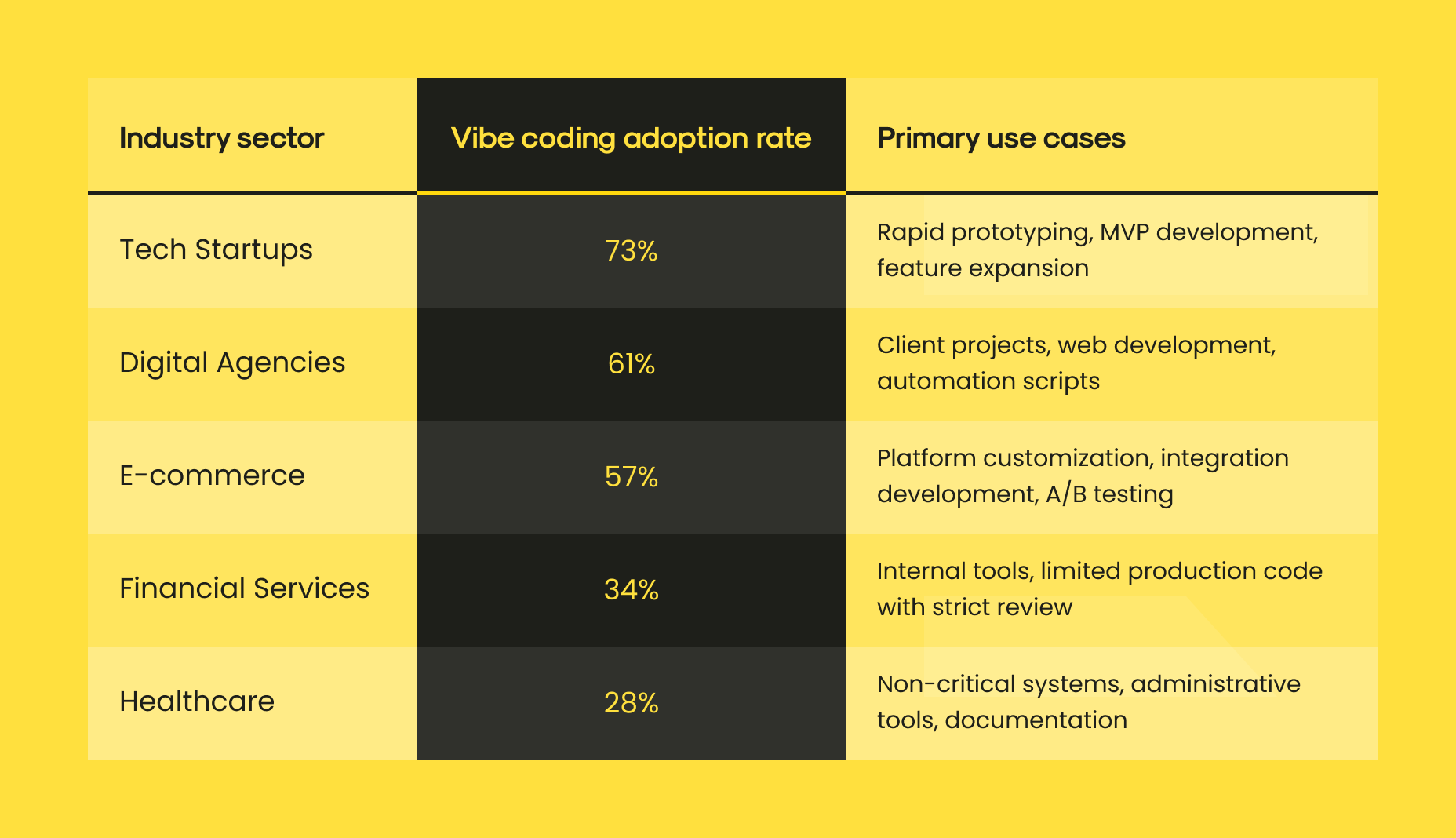
Vibe coding adoption rate
With industry giants like Google reporting that about 25% of their code is now AI-generated, the demand for specialists who can optimize this output is growing rapidly. In this article, we’ll explain why the job of a coding cleanup specialist is becoming vital in modern AI-driven development workflows.
Why the role emerged: AI prototype code vs. production quality
A vibe coding cleanup specialist is a new type of professional whose expertise lies in refining and stabilizing code generated through vibe coding. But why did this role emerge in the first place? As said earlier, this new method of developing software often produces output that:
- Lacks consistent architecture
- Introduces bugs or logic errors
- Is missing critical testing and documentation
- Contains security vulnerabilities
- Isn’t scalable for real-world usage
Vibe coding focuses on getting something working as fast as possible, leaning on instinct and loose structure rather than careful architecture. The goal is rapid validation and momentum, not elegant code. In other words, speed wins, and refinement comes later.
The Veracode security analysis found that nearly half of AI-generated code contained security flaws, underscoring the need for rigorous review and cleanup. The recent survey by Fastly revealed that over 95% of nearly 800 developers spend additional time correcting AI-generated code. As senior developers shoulder most of the verification work, TechCrunch has even dubbed them “AI babysitters”.
Skipping the cleanup work
Skipping a proper vibe coding cleanup can turn your launch into a costly disaster. Without a solid architecture and professional development practices, AI-generated apps are prone to predictable, high-impact failures. Some real-world pitfalls include:
Wasted API calls and tokens. Inefficient or buggy code can trigger thousands of unnecessary API requests, quickly hitting rate limits and racking up huge bills.
Data breaches. Hardcoding API keys or other sensitive information is a common shortcut in vibe coding. One slip can lead to major data breaches, leaking user information and damaging trust.
Post-release disaster. Poorly structured databases and inefficient queries can grind your app to a halt once a small user base arrives. Combined with rushed UX/UI design, this results in frustrated users, bad reviews, and high churn.
The specialist vs. the cleanup engineer
Let’s take a moment to talk about job titles. While vibe coding cleanup specialist is the primary job title discussed here, similar roles may overlap:
- Vibe coding cleanup engineer emphasizes engineering and implementation duties
- AI code refactoring specialist highlighting a more general cleanup focus
- Vibe coding consultant used in freelance and advisory contexts
One way or another, all these roles share the core mission: transform AI-generated code into reliable, maintainable software. So what do coding cleanup professionals do?
How vibe coding cleanup specialists work
Whenever a vibe coder generates new code, they have the option to pass it along to a vibe coding cleanup specialist, a professional with deep expertise in refining AI-produced code. These specialists combine years of software development experience, often including legacy system maintenance, with a keen understanding of how AI typically structures code.
The specialist begins by carefully reviewing the output, running a series of diagnostic tests to uncover errors, inefficiencies, or inconsistencies. Once potential issues are identified, they methodically adjust the code: adding, modifying, or removing sections as needed. The goal is to transform the AI-generated draft into a reliable program while eliminating any hidden vulnerabilities or unsafe elements.
A cleanup specialist typically:
- Audits the AI-generated codebase, identifying bugs, performance issues, and architectural missteps.
- Refactors and reorganizes code into readable, maintainable modules.
- Implements tests and CI/CD workflows for sustainable development.
- Fixes security gaps and improves error handling.
- Documents the system so future contributors can understand and extend it.
In all fairness, this is far more than “run an automated tool”, but about engineering judgment, best practices, and deep coding expertise.
Vibe coding cleanup challenges
Surely, challenges exist. Even with a skilled human cleaning up your AI-generated code, there are risks, limitations, and costs that every team should consider before relying on it blindly.
Quality. Having a human clean up AI-generated code doesn’t guarantee perfection. No developer can promise that the code will be flawless. If the cleanup misses something, you might not even notice, and that could cause serious problems down the line.
Cleanup cycles. Once the cleanup is done, the code becomes a fixed snapshot in time. If you later want the AI to regenerate or expand the program, there’s no easy way to merge it with the previous cleanup. Any changes or new functionality often require another full round of cleanup, which can be time-consuming and costly.
And here’s the catch: imagine realizing after the first cleanup that your prompt didn’t capture all the features you actually needed. You’re left either keeping the incomplete version or paying for a fresh cleanup of the updated AI output.
Costs. The cost of cleanup can sometimes exceed what it would have taken to have a developer write the code from scratch. While vibe coding can feel like a shortcut, the effort and expense of refining and debugging AI-generated code can add up quickly. In other words, weigh the speed and novelty of AI coding against the extra work and costs that may follow.
Key takeaway
Ultimately, AI-assisted coding is a powerful tool, but it isn’t a magic wand, so to speak. Understanding the limitations of cleanup, the challenges of updating code, and the potential costs will help you use vibe coding effectively without getting caught off guard.
Vibe coding pros and cons
To cut a long story short, vibe coding is a powerful accelerator. It can dramatically speed up development, but it also comes with important trade-offs you need to understand before using it in your projects. Let’s take a closer look at vibe coding pros and cons, shall we?
Key benefits
- Speed. Enables fast experimentation and prototyping, making it ideal for MVPs and projects that involve a lot of repetitive or boilerplate code.
- Accessibility. Makes software creation more approachable by allowing people with limited technical backgrounds to build working applications.
- Creative focus. Shifts attention away from syntax and implementation details, letting developers concentrate on intent and product ideas.
Considerations and risks
- Still demands expertise. Successful vibe coding depends on solid engineering knowledge to steer the AI, review its output, and make informed decisions.
- Quality and security concerns. Code produced by AI may include inefficiencies, hidden bugs, or vulnerabilities, so thorough testing and audits are essential before production use.
- Risk of over-dependence. Relying too heavily on AI tools can slow down skill development, particularly for those still learning core programming concepts.
Key takeaway
The benefits of vibe coding come hand in hand with limitations. As one developer put it: “An AI coding tool like GitHub Copilot significantly improves my workflow by suggesting code snippets and even full functions. However, it once produced a complex algorithm that looked correct but had a hidden bug, costing me several hours of debugging”.
The rise of vibe coding cleanup as a service
As the volume of AI-generated code has grown, so has a niche market around vibe coding cleanup services. In many cases, clients bring AI-generated MVPs they built themselves and need targeted expertise to make them viable software products, and this demand fuels this new job role.
Is AI-generated code safe for production?
AI-generated code can be useful in production only after thorough human review and cleanup. Hidden bugs, performance issues, and security vulnerabilities are common, especially in rapidly generated MVPs.
Coding cleanup services are offered by individual specialists, consultancies, and platforms that help teams:
- Analyze and audit AI-built codebases
- Improve structure and readability
- Add test coverage
- Eliminate technical debt
- Hard-en security and compliance
- Prepare systems for scaling or deployment
In the end, vibe coding cleanup is less about fixing mistakes and more about finishing the job properly. As AI-built MVPs become the norm, cleanup specialists quietly become the difference between a clever prototype and a product that actually survives.
Who needs a vibe coding cleanup specialist?
This role becomes especially relevant for a wide range of teams and stakeholders, each facing different challenges when working with AI-generated code:
Startups and founders
- Turn AI prototypes into production-ready products
- Avoid technical debt that can kill growth
- Accelerate feature releases with confidence
Engineering teams
- Gain maintainable, scalable code that adheres to best practices
- Reduce future debugging and support costs
- Improve team velocity with clean foundations
Product managers
- Ensure features work reliably
- De-risk launches with consistent testing and documentation
Cybersecurity and DevOps
- Close AI-generated security gaps
- Build reliable CI/CD pipelines around cleaned code
When do you need a vibe coding cleanup specialist?
When prototypes need to survive production and systems need to hold up under scale, someone has to bridge the gap between fast generation and solid engineering. That’s where vibe coding cleanup specialists fit in. They give as a practical response to the growing volume of AI-generated code that still needs human judgment to stand on its own.
How Mitrix can help
Here at Mitrix, we help teams navigate the growing world of AI-generated code with vibe coding cleanup services. A core part of our approach is how seriously we invest in training our specialists: we develop them as engineers who not only know how to refactor code, but also understand how AI-generated systems behave under real-world conditions.
We focus our training on:
- advanced code review
- refactoring AI-produced architectures
- identifying systemic flaws typical of LLM output
- applying production-grade standards for security and maintainability.
Our specialists work hands-on with real AI-built codebases, learning how to stabilize fast prototypes, introduce testing and documentation, and prepare systems for long-term evolution rather than one-off fixes.
Whether you’re a startup experimenting with AI prototypes or an enterprise scaling development, Mitrix’s vibe coding cleanup specialists help you turn AI outputs into robust software. Contact us to plan your next steps today!
Summing up
According to Gartner, 75% of enterprise software engineers will use AI coding assistants by 2028. However, although vibe coding makes experimentation faster, its speed comes with trade-offs. AI-generated code often needs careful review, restructuring, and hardening before it can survive real users, real traffic, and real security threats.
This is precisely where a vibe coding cleanup specialist comes in, transforming AI-generated code into something maintainable and secure over time. In short, vibe coding accelerates creation, and cleanup ensures longevity. As more teams rely on AI to generate large parts of their codebase, cleanup stops being a nice-to-have and becomes a practical necessity. Think of it as a refinement process that turns your initial AI-generated project into a reliable foundation for growth and real-world use.